

6.0L Powerstroke Common Questions — What Owners Ask Most and How to Fix It

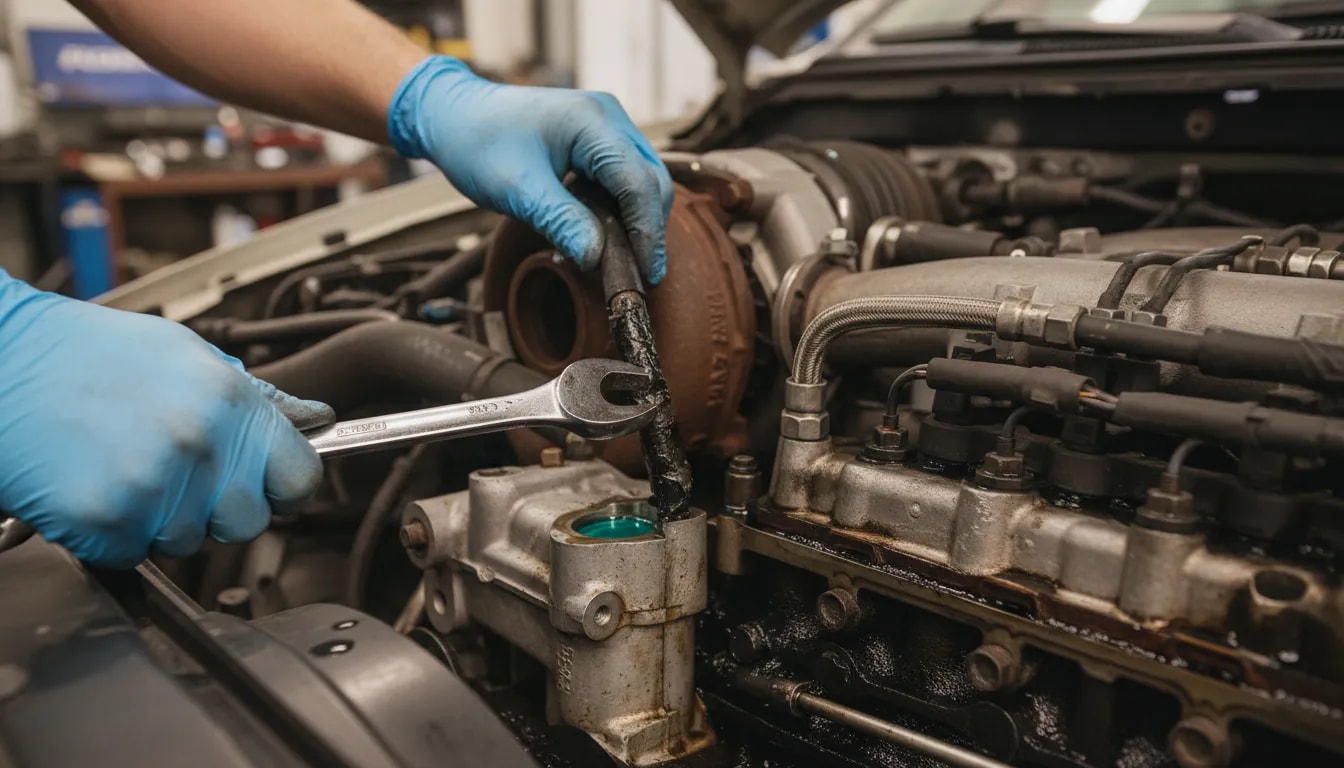
If you own a 6.0L Powerstroke or are shopping for one, these 6.0L Powerstroke Common Questions come up again and again. This guide collects the most frequent concerns—what causes them, how they’re often misdiagnosed, and sensible fixes and upgrades that actually help keep these trucks on the road.
Top problems that keep 6.0L owners awake at night
The list below covers the failure points most commonly reported: oil cooler, EGR cooler, head gaskets, injectors, FICM, high-pressure oil system, turbo-related boost issues, low fuel pressure, and cooling system neglect. Each item includes what to look for, why it fails, and practical solutions.
1. Oil cooler failure — messy and costly
The factory oil cooler has tiny internal passageways that clog when coolant additives break down. When the cooler clogs or splits you’ll often smell a sweet or funky odor and see coolant that looks like pancake batter in the reservoir — oil and coolant mixing.
Short checklist:
- Symptoms: funky smell, milky coolant, overheating, contamination.
- Temporary fixes: thorough cooling-system flushes (multiple passes).
- Long-term fix: front-mounted air-to-oil coolers and billet block adapters from reputable manufacturers.
2. EGR cooler and EGR valve failures
Failures happen because welded seams in the EGR cooler can crack, dumping coolant into the exhaust. That clogs catalytic converters, fouls the EGR valve, and creates a gooey mess. Deleting the EGR used to be common, but removing emissions equipment is illegal and not recommended.
The practical approach is to replace failing EGR components with upgraded, properly designed units from reputable makers that address the factory weakness.
3. Head gaskets — often misdiagnosed
Coolant being forced into the exhaust (from a split EGR cooler or oil cooler) will blow the degas bottle cap and coat the reservoir with white flecks. Many shops automatically call this a blown head gasket. Pressure-test the cooling system first — it could be another leak overpressurizing the coolant system.
If head gaskets are needed, do the job right: O-ring the heads and use ARP head studs. For most street towing and daily driving, standard ARP studs are sufficient — reserve extreme stud kits for very high horsepower builds.
4. Injector problems — fuel quality and maintenance
Injector failures increased after ultra low sulfur diesel became standard. Tank liners can break down and send debris into the fuel system. Use a trusted fuel additive and service routine to protect injectors.
- Recommended: a lubricity fuel additive (many shops use Hot Shot Secret).
- Oil changes: refresh engine and high-pressure oil every ~3,500 miles — running oil too long invites injector issues.
- Stiction / stuck injectors: certain oil additives or stiction modifiers can free sticky injectors if caught early.
5. FICM (Fuel Injector Control Module) failures
Low battery voltage is the most common root cause. The FICM is sensitive to voltage droop; weak batteries or poor charging can burn out circuits. Symptoms range from hard starts and misses to random electrical oddities.
Keep battery voltage healthy, use a voltage meter in the cab, and consider upgraded FICMs that address heat and fragility issues if replacements are needed.
6. High-pressure oil system and STC fittings
Early 03–04 trucks used an aluminum high-pressure oil pump that can wear and leak. The 05–07 trucks use an improved cast iron pump, and most high-pressure pump failures on those years are actually misdiagnosed leaks at STC bracket quick-connect fittings.
A good shop diagnoses by air testing the HP oil system and using listening tools to find the leak location — under valve covers, dummy plugs, injector O-rings, or the STC fitting. That prevents expensive, unnecessary pump replacements.
7. Turbo issues — often just a hose or MAP sensor
A common misdiagnosis is replacing a turbo for boost-related codes while the real problem is a brittle MAP hose that cracks under boost or a faulty MAP/EBP sensor. Inspect and pressure-test hoses and sensors before assuming turbo replacement.
8. Low fuel pressure and lift pump upgrades
Weak lift pumps are less common on the 6.0L than on some Cummins setups. If you upgrade, avoid oversized low-pressure pumps. A 140 gallon-per-hour pump is generally the right balance for most builds — too much flow can overheat and aerate fuel, causing more harm than good.
9. Cooling system neglect — the root of many failures
Most coolant-related failures are caused by neglect. Coolant breaks down and additives separate over time. Follow a simple maintenance routine: use 50/50 premixed coolant and flush and refill the system every other year to prevent solids from clogging oil and EGR coolers, heater cores, and radiators.
10. Is the 6.0L Powerstroke reliable?
Yes — when maintained. Many problems trace back to neglect, bad fuel, or poor diagnostics by shops. With regular oil changes, coolant maintenance, proper fuel additives, and sensible upgrades, the 6.0L can be dependable and enjoyable to drive.
Practical diagnostic tips — avoid expensive misdiagnoses
- Smell the tailpipe. Sweet/stinky smells suggest coolant; burning-diesel odors point to fuel; rotten-egg smells likely indicate oil burning and bluish smoke.
- Pressure-test the cooling system before assuming head gaskets.
- Check the MAP hose under boost (hairline cracks only show under high pressure).
- Monitor battery voltage with an in-cab meter; keep voltage above ~13.5V when sitting and charging properly.
- Air test HP oil system and use a stethoscope to locate leaks before replacing the high-pressure oil pump.
Recommended fixes and upgrades that actually help
- Oil cooler fix: front-mount air-to-oil solutions and billet adapters from trusted builders.
- EGR cooler: replace with upgraded, properly welded units rather than deleting (deletes are illegal).
- FICM: upgraded unit or professional rebuilds with improved insulation.
- Fuel system: use a quality lift pump (140 gph recommended), regulated return for high-power builds, and a trusted fuel additive to protect injectors.
- Heads / head studs: ARP head studs and proper O-ring work when replacing gaskets.
- Maintenance: oil every 3,500 miles, fuel filters every other oil change, coolant flush every other year.
How much safe power?
Stock is rated around 325 hp. With mild tunes and bolt-ons you can safely get 400–500 hp. Aggressive builds can exceed 600 hp, but that requires proper supporting hardware: heads, injectors, regulated fuel, fast fuel pump, and upgraded engine fastening.
Maintenance checklist
- Oil change: every 3,500 miles
- Fuel filter: every other oil change
- Coolant flush: every 2 years (50/50 premix only)
- Rear differential, transmission, transfer case: every 40,000 miles
- Front differential: every 80,000 miles
FAQ
How do I know if my oil cooler has failed?
Look for a sweet or funky smell, milky or pancake-batter-looking coolant in the reservoir, and signs of coolant contamination. A thorough coolant flush can help diagnose, but a split cooler will mix oil and coolant and needs replacement or a front-mounted solution.
Can I delete the EGR to stop EGR cooler failures?
Deleting emissions equipment is illegal and not recommended. Replace the EGR cooler with an upgraded unit designed to correct the factory weakness instead of deleting the system.
My truck is blowing coolant out the reservoir — is it always a head gasket?
No. Overpressurizing from a busted EGR cooler or oil cooler can force coolant out. Pressure-test the cooling system first; if tests show no head-gasket failure, inspect the EGR and oil cooler.
Why are injectors failing on these trucks?
Poor fuel quality, breakdown of sprayed-in tank liners, and running oil too long contribute. Use a proven fuel additive and change oil regularly. Early intervention with stiction modifiers can sometimes free sticky injectors.
My shop says I need a high-pressure oil pump on an 05–07. Is that likely?
On 05–07 trucks, the STC fitting or bracket is the more likely source of HP oil leaks. Have the shop air-test the system and inspect the STC fittings before authorizing an expensive pump replacement.
What’s the right low-pressure fuel pump upgrade?
Avoid oversizing. For most 6.0L trucks, a 140 gph pump hits the sweet spot. Too large a pump can overheat, aerate fuel, and damage components.
Final word
The 6.0L Powerstroke Common Questions are rooted in a few repeatable themes: weak factory components in specific areas, poor maintenance, bad fuel, and sloppy diagnostics. With a little care — regular oil changes, coolant service, a quality fuel additive, and targeted upgrades where it matters — these engines can be reliable and fun to drive. Prioritize correct diagnosis and quality parts, and you’ll save time and money.