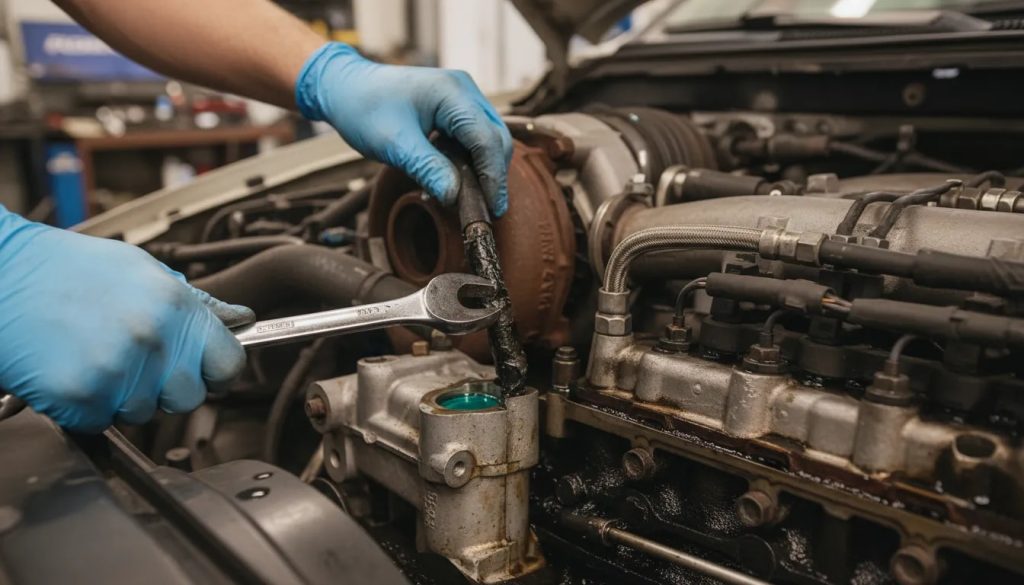




If you own a 6.0L Powerstroke and are hunting answers, this guide collects the real, practical advice I give most often. The phrase 6.0L Powerstroke Common Questions shows up because these trucks spark the same conversations: cooling system failures, EGR problems, injector headaches, and shops selling expensive fixes that do not solve the root cause. I’ve spent over a decade in a 6.0 specialty shop, and this is how I break the big issues down so you can make smarter decisions and save money.
Table of Contents
- How to use this guide
- Top problems and why they happen
- 1 — Oil cooler failures: what to look for and real solutions
- 2 — EGR cooler and EGR valve failures
- 3 — Head gasket symptoms are often misdiagnosed
- 4 — Injector failures: fuel quality and maintenance matter
- 5 — FICM (fuel injection control module) failures: usually electrical
- 6 — High-pressure oil system and STC fitting issues
- 7 — Turbo problems: don’t automatically buy a turbo
- 8 — Low fuel pressure and FAST low-pressure pump upgrades
- 9 — Cooling system maintenance: the single best prevention
- 10 — Are 6.0L Powerstrokes reliable?
- Bulletproofing and head studs: what “bulletproof” actually means
- Common upgrades that improve reliability and performance
- How much power can a 6.0L make safely?
- Diagnostics: quick smell, sight, and sound checks
- Maintenance checklist — what to do and when
- What to do when a shop recommends expensive parts
- Parts I often recommend
- 6.0L Powerstroke Common Questions — Final thoughts
- FAQ
How to use this guide
Read the short sections for each failure mode, follow the diagnostic pointers, and use the maintenance checklist at the end. I’ll tell you what to suspect first, what shops often miss, and which fixes are worth the money. The list below covers the most frequently asked 6.0L Powerstroke Common Questions in plain language.
Top problems and why they happen
Here are the failure points you should know about, in order of how often they come up:
- Oil cooler failure
- EGR cooler and valve failure
- Head gasket or overpressurized cooling system
- Injector damage (fuel quality and stiction)
- FICM problems (voltage related)
- High-pressure oil leaks and STC fitting issues
- Turbo diagnostic traps (boost pipes, MAP, EBP)
- Low fuel pressure (lift pump) and FAST upgrades
- Maintenance-related cooling system problems
- General reliability and what “bulletproof” actually means
1 — Oil cooler failures: what to look for and real solutions
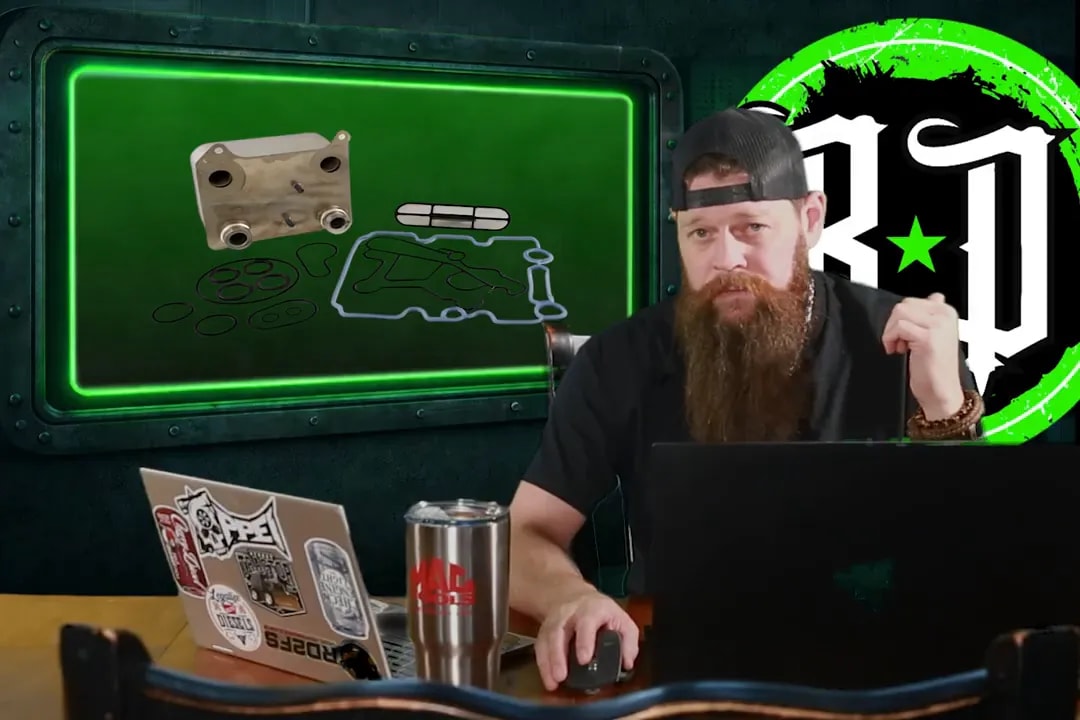
Oil cooler failures are the messiest, most expensive, and most common headaches. The factory cooler uses tiny coolant passages that clog when the additive package in the coolant separates over time. The result is contamination that packs into the oil cooler and EGR cooler, sending oil into the coolant when the oil cooler splits.
The telltale signs are a funky, sweet smell and coolant that looks like pancake batter in the reservoir — oil mixing with coolant. If that shows up, don’t ignore it.
Fix options:
- Short-term: Thorough cooling system flush and replacement OEM-style oil cooler when budget is tight.
- Long-term: Front mount air-to-oil cooler kit that removes the oil cooler from the valley and cools oil with airflow — the most reliable cure.
2 — EGR cooler and EGR valve failures
The EGR system on the 6.0L was their first attempt at EGR. Factory EGR coolers used welded seams that can fail, dumping coolant into the exhaust. That coolant can foul the turbo and catalytic components, and cause EGR valve sticking and soot buildup.
People used to delete the EGR because it solved a recurring reliability problem. That is no longer a legal option. If you need a permanent fix without legal risk, invest in a higher-quality replacement EGR cooler that addresses the weld and core design flaws.
3 — Head gasket symptoms are often misdiagnosed
When coolant suddenly blows out the degas bottle cap, shops often jump to blown head gaskets. That diagnosis can be correct — but more often the system has been overpressurized by a failed EGR or oil cooler and the reservoir cap simply popped. The cooling system is only designed for about 14–15 psi, while the turbo can make 25–30 psi easily.
Before signing off on an engine-out head gasket job, insist on pressure testing the cooling system and tracing leaks. If you do need the job, the correct route is O-ring the heads and install ARP head studs. You do not need extreme 625-series studs unless you are chasing very high horsepower numbers.
4 — Injector failures: fuel quality and maintenance matter
Injector issues spiked after the introduction of ultra low sulfur diesel. That fuel can strip deteriorating sprayed-in tank liners and send abrasive “gray glitter” through the fuel system. Poor fuel quality equals shortened injector life across all diesel brands.
Preventive measures:
- Run a quality fuel additive that restores lubricity. I use Hot Shot Secret and recommend it because it works consistently.
- Use a diesel oil additive for stiction control when needed (products like Revex can free stuck injectors).
- Change engine oil at sensible intervals — I change every 3,500 miles on these engines. Old, contaminated oil affects injector dynamics.
5 — FICM (fuel injection control module) failures: usually electrical

FICM failures often present as hard starts, rough running, or multiple cylinder contribution codes. The most common root cause I see is low battery voltage. Weak batteries allow the FICM to be voltage-starved and damage circuits over time.
Practical steps:
- Keep battery voltage healthy and test it before blaming major components. If idle voltages are consistently low, address batteries or charging system first.
- When replacing a FICM, choose a quality unit that addresses heat and vibration weaknesses. Rebuild services are a lower-cost option; if you do install a rebuilt or upgraded FICM, consider an appropriate FICM tune for better drivability and economy.
6 — High-pressure oil system and STC fitting issues
High-pressure oil leaks get misdiagnosed frequently. The model year matters. Early 03–04 trucks had aluminum HP oil pumps that can develop internal leaks. The 05 and later trucks moved to a cast iron pump and a quick connect STC fitting that can be the real source of leaks.
Diagnosis tips:
- Air test the system to find leaks.
- Use a stethoscope and listen under valve covers, around dummy plugs, injector O-rings, and the STC bracket.
- On 05–07 trucks, suspect the STC bracket or fitting long before spending the money on a $1,000 pump.
7 — Turbo problems: don’t automatically buy a turbo

A no-boost fault does not automatically mean the turbo is bad. Very often the intake-to-MAP sensor hose develops hairline cracks that only show under boost, or the MAP sensor itself fails.
Quick checks that save money:
- Inspect the rubber MAP tube for brittle hairline cracks that reveal themselves at 20+ psi. The tube sits near hot exhaust components and becomes brittle with age.
- Check the MAP sensor and the EBP sensor (electronic boost pressure sensor). Faulty sensors and boost leaks are common misdiagnoses.
- Only replace the turbo if these upstream checks fail to isolate the problem.
8 — Low fuel pressure and FAST low-pressure pump upgrades
Weak lift pumps are not as common on the 6.0 as they are on some other platforms, but pump wear with age is a thing. If your low-pressure pump fails, the sensible upgrade is a FAST system. However, bigger is not always better.
Recommendation:
- For a stock or mildly modified 6.0L, a 140 gallon per hour FAST pump is the right choice. Too large a pump can overheat and aerate fuel, which damages injectors and regulators.
- Only step up to a larger pump if you are making very high horsepower levels (800+ hp).
9 — Cooling system maintenance: the single best prevention
Almost every catastrophic cooling-related failure ties back to neglected coolant service. Coolant additive packages break down and separate, leaving solids that clog oil coolers, EGR coolers, heaters, and radiators.
Do this:
- Flush and replace coolant every other year. Use a 50/50 premix. Do not use plain tap water.
- Follow a thorough flush procedure. If you want a how-to, seek a trusted guide from cooling specialists.
10 — Are 6.0L Powerstrokes reliable?
Yes. The 6.0L Powerstroke has a reputation for certain recurring issues, but they are largely maintenance related. Proper upkeep prevents most failures. I personally prefer 6.0L trucks over other diesels I have owned for their durability when maintained correctly.
Things to accept:
- They will occasionally suffer electrical oddballs and age-related failures.
- They generally get you home and are easy to fix — provided you diagnose correctly and avoid unnecessary part replacements.
Bulletproofing and head studs: what “bulletproof” actually means
The term bulletproof gets tossed around a lot. There is no magic guarantee that removes the need for maintenance. Bulletproofing is about replacing weak factory components with improved designs. That helps, but it is not a substitute for proper service.
If you want head studs and an O-ring job, make sure the shop you hire knows the correct procedures. Many shops advertise “bulletproof” installs but cut corners. ARP studs are the only head studs I recommend — no knockoffs.
Common upgrades that improve reliability and performance
If you plan to modify, prioritize reliability first, then power. Recommended path:
- Cooling system upgrades (front mount oil cooler, upgraded water pump)
- FICM upgrades or rebuilds if electrical issues appear
- ARP head studs and head O-rings if you tow heavily or plan more power
- FTA solutions on fuel system: 140 gph FAST pump for most builds
- Tuner and controlled FICM/ECM tunes matched to fuel system upgrades
How much power can a 6.0L make safely?
Practical ranges:
- Stock: 325 hp
- Mild bolt-ons and tunes: 400–500 hp reliably
- Aggressive builds: 600+ hp with full supporting upgrades
If you chase power, plan the supporting systems first: fuel, cooling, heads, and proper tuning. Running a highly modified 6.0 without addressing cooling and the HP oil system is a fast way to a teardown.
Diagnostics: quick smell, sight, and sound checks
When a truck has hard starts, smoke, or rough run:
- White smoke that smells sweet = likely coolant
- Blueish smoke and rotten-egg smell = oil burning
- Black, acrid smoke that irritates the eyes = fuel
Use these simple heuristics to prioritize tests. Then pressure-test the cooling system, check the oil/coolant for cross-contamination, and run targeted sensor and hose inspections before replacing major assemblies.
Maintenance checklist — what to do and when
- Engine oil and filter: every 3,500 miles (use a quality synthetic)
- Fuel filters: every other oil change
- Coolant flush and refill with 50/50 premix: every 2 years
- Rear differential, transmission, and transfer case fluid: every 40,000 miles
- Front differential fluid: every 80,000 miles
- Battery voltage checks: monitor often, replace when under 13.5V resting
What to do when a shop recommends expensive parts
If a shop tells you a $1,000 pump, a turbo, or an engine is necessary, ask these questions first:
- Did you pressure-test the cooling system or fuel system? Show me the test.
- Did you inspect hoses, MAP tubing, and sensors before replacing the turbo?
- Are you certain the FICM isn’t voltage-starved by weak batteries?
A trustworthy shop will run methodical tests. If they cannot or refuse to show diagnostics, get a second opinion.
Parts I often recommend
- Quality front mount oil cooler kits for long-term oil/coolant separation fix
- Upgraded replacement EGR coolers that address weld failures
- ARP head studs and proper head O-ring kits for engines prone to gasket issues
- FICM upgrades or rebuilds that include thermal and vibration hardening
- FAST 140 gph low-pressure pump for most builds
6.0L Powerstroke Common Questions — Final thoughts
The reputation of the 6.0L Powerstroke comes from repeated, predictable failure modes that are avoidable with proper maintenance and sensible upgrades. The single best investments are keeping coolant fresh, maintaining battery health, avoiding oversized low-pressure pumps, and addressing weak factory components with proven upgrades when needed.
The term 6.0L Powerstroke Common Questions exists because owners ask the same things over and over. Now you have a compact playbook: how to inspect, what to replace first, and what to insist a shop prove before accepting a big bill.
FAQ
How do I know if my oil cooler has failed?
Look for a sweet, oily smell and coolant that appears milky or like pancake batter in the reservoir. That indicates oil is mixing with coolant and the oil cooler is likely compromised. Pressure testing and a cooling system flush confirm the diagnosis.
Can I delete the EGR to stop EGR-related failures?
Deleting the EGR is illegal. Instead, replace the factory EGR cooler with a high-quality unit designed to cure the weld and core failure modes. That fixes the reliability issue without running afoul of the law.
Are head gasket failures common on the 6.0L?
Head gasket issues are seen, and they are linked to the 6.0L having four head bolts per cylinder versus six on many other diesels. Often the first thing shops should check is cooling system overpressure from EGR or oil cooler failure before assuming head gaskets.
Why do injectors fail on the 6.0L?
Poor fuel quality, ULSD stripping tank liners, stiction, and extended oil change intervals contribute. Preventive use of a reputable fuel additive and keeping oil fresh reduces injector failures significantly.
What should I do if a shop says I need a new turbo for no boost?
Insist they inspect the MAP hose, MAP sensor, and EBP first. Hairline cracks in boost hoses or failed sensors are common and inexpensive to fix compared to a turbo replacement.
How often should I flush the coolant?
Every two years regardless of mileage. Always use a 50/50 premix and avoid tap water to prevent mineral buildup.
Are ARP head studs necessary?
For daily drivers who tow or plan mild to moderate power increases, ARP studs and proper head O-rings are a smart insurance policy. Use reputable studs and ensure a quality shop installs them.
How much power can a 6.0L reliably handle?
Stock is 325 hp. With bolt-ons and tuning 400–500 hp is reliable. Aggressive builds over 600 hp require supporting upgrades to cooling, fuel, and heads.
What low-pressure pump should I use if mine fails?
A FAST 140 gph pump covers most builds without overheating or aerating fuel. Bigger is not better unless you plan extreme horsepower.
How do I avoid getting ripped off by a shop?
Ask for diagnostic proof, insist on pressure tests and sensor checks before part swaps, and get a second opinion for high-ticket items like HP oil pumps or engine work.