


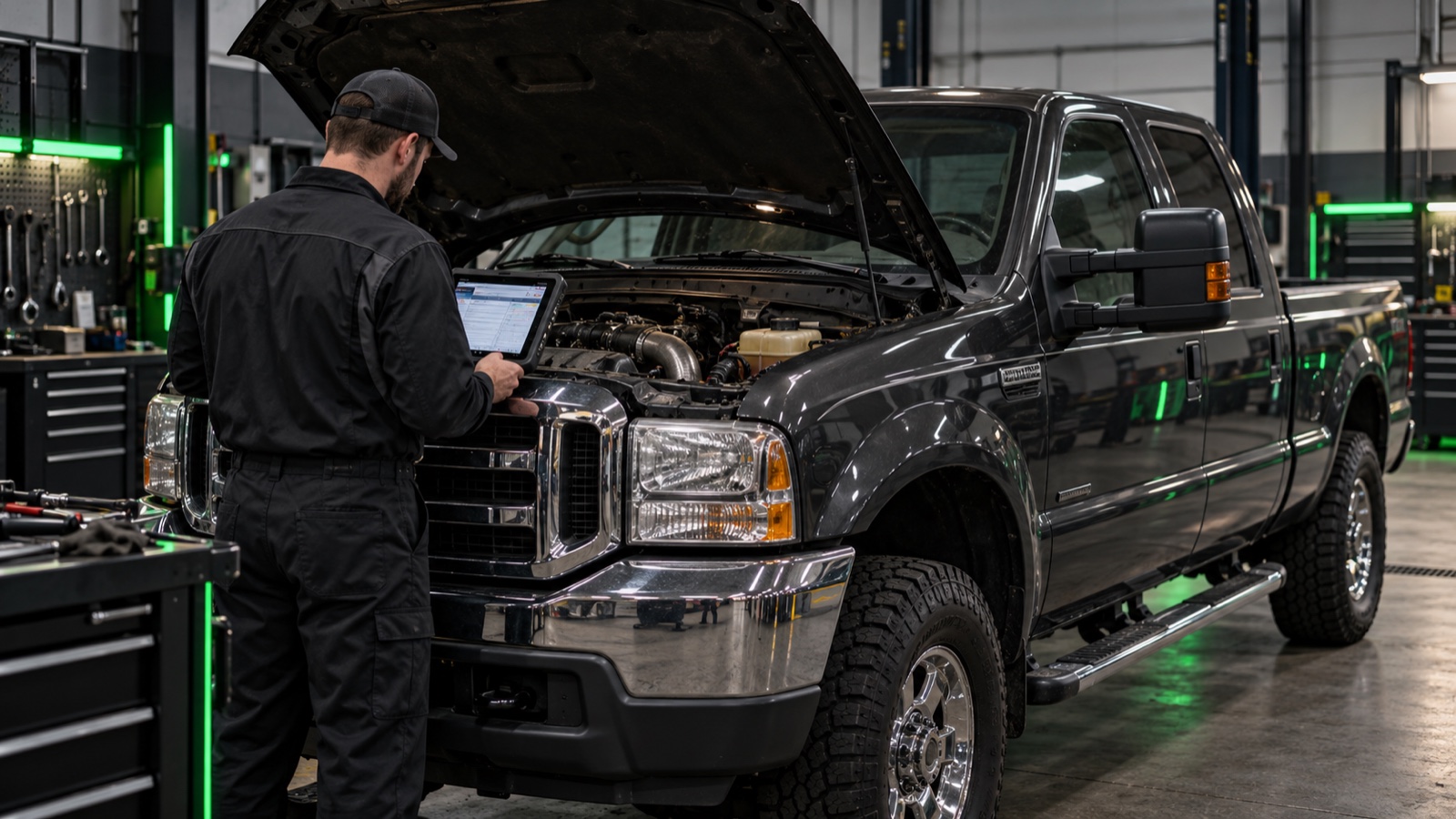

A 6.0 Powerstroke no-start can get expensive fast when you start replacing parts before finding the problem. If somebody tells you the high-pressure oil pump is bad, my first question is simple: what test proved that?
Your truck needs a diagnosis, not a shopping list. In the Review Diesel video below, I explain why an oil leak can send you down the wrong path—and why the model year matters.
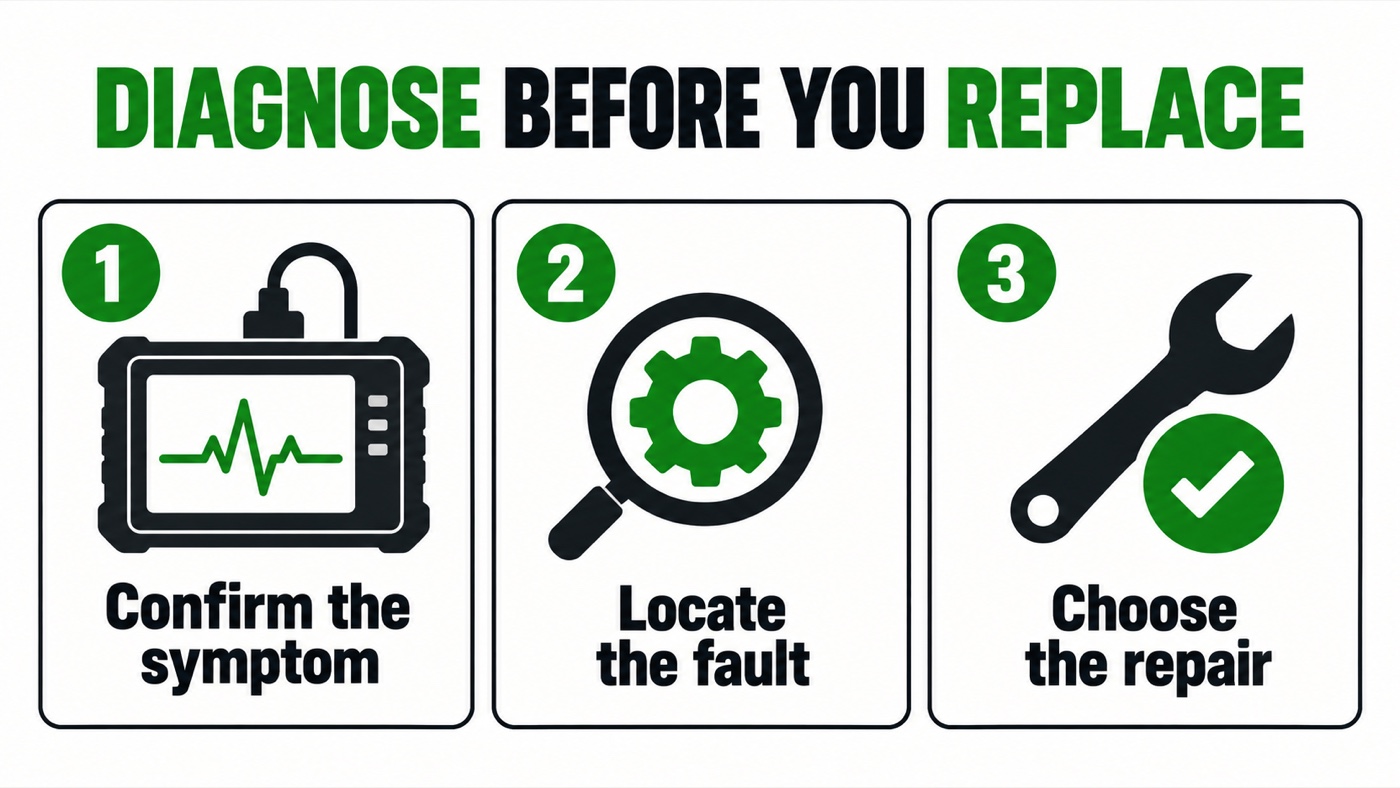
A no-start is a symptom, not a failed-part diagnosis
A high-pressure oil system problem is one possible reason a 6.0L will not start. It does not mean every crank-no-start needs an HPOP. Before approving that repair, ask the shop to explain what it measured, what it ruled out, and where it found the fault.
That distinction matters. A system that cannot build adequate pressure might have a leak rather than a failed pump. Replacing the pump without locating the leak can leave you paying for an expensive part that did not solve the underlying issue.
Why the model year changes the conversation
In this video, I separate the earlier 2003–2004 arrangement from the later 2005–2007 system. The later system uses an STC connection that deserves attention during high-pressure oil leak diagnosis. Do not order an STC update simply because the truck has a 6.0L badge.
The earlier pump design is a different discussion. The right repair depends on the hardware actually installed in your truck, especially if an engine or major component has been replaced. Confirm the build and configuration before choosing parts.
Ask where the high-pressure oil is escaping
I discuss air testing in the video because locating a leak gives you something useful to work from. A qualified technician can follow the appropriate service procedure and investigate the pump connection and components under the valve covers, including seals, standpipes and dummy plugs where applicable.
This is not a suggestion to pressurize an unfamiliar system in your driveway. Have the shop follow the correct procedure for your engine. What you want as the owner is a clear explanation of the result.
- Was a high-pressure oil problem confirmed?
- Where was the leak located?
- What evidence points to the pump itself?
- Does the replacement match the actual engine configuration?
- How will the repair be checked afterward?
Can the HPOP still fail?
Yes. Do not turn “check the fitting first” into “the pump can never fail.” The point is to avoid condemning a component without evidence. My experience in the video is a reason to ask better questions, not a substitute for testing your particular truck.
Buy the repair your truck actually needs
Once the problem is identified, match the replacement to the year, engine configuration and confirmed failure. If you are unsure which part belongs on the estimate, get those details together before you order. Spending money once on the right repair beats paying twice to chase the same no-start.
Browse Powerstroke parts and confirm the product application before purchasing.
Watch the diagnosis discussion
Watch: 6.0 No Start Condition Explained — Don’t Replace the HPOP Yet
Common questions
Does a 6.0 Powerstroke no-start mean the HPOP is bad?
No. A no-start needs diagnosis. When the high-pressure oil system is involved, a leak can be part of the problem; the pump should not be replaced solely because the engine will not start.
Should every 6.0L get the same STC fitting?
No. Verify the installed system and product application. The earlier and later configurations discussed in the video are different.
Will this repair require changing emissions equipment?
This article concerns diagnosing and repairing the high-pressure oil system. It does not recommend removing, disabling or bypassing emissions controls. Keep the vehicle’s required emissions systems operational.