


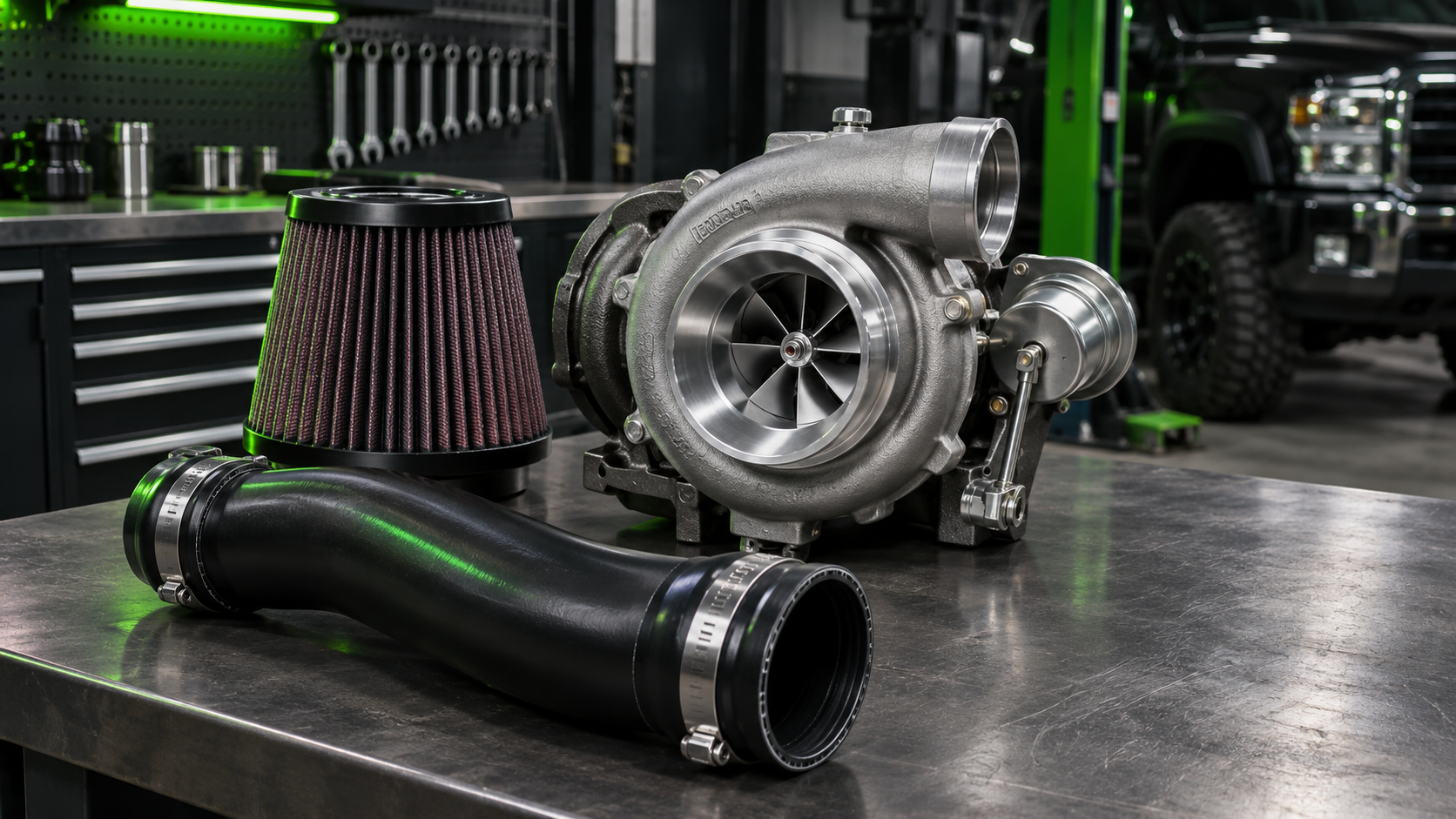

The LLY turbo mouthpiece deserves a look when you inspect the intake system. In the video, I point out the potential for a split in that component. The useful response is an inspection, not an automatic turbo replacement.
If you are shopping for a replacement, first confirm what is installed. Older trucks often have parts from previous owners, and that changes what you need to order.
Look at the full intake path
With the engine off and cool, inspect the visible intake components and connections. Look for damage, a loose connection or a part that is no longer seated properly. Do not reach around moving components to search for a leak.
If you suspect an opening downstream of the filter, have it addressed before continuing to use the truck. Also have the technician check the surrounding system instead of replacing one visible piece and assuming everything else is fine.
Confirm the engine and component combination
Use the engine identification and product application information, not just the truck’s appearance. The replacement needs to match the turbo inlet and the rest of the installed intake.
Tell the seller about any aftermarket intake or turbo. Photos and existing part numbers can help resolve a fitment question before the package arrives.
Read what the replacement actually includes
- Which engine and years the manufacturer lists.
- Whether it works with your installed intake and turbo.
- Which connections, seals and hardware are included.
- What the installation instructions require.
- Any application-specific emissions restrictions.
I mention a replacement option in the source video, but do not turn a brand mention into a universal fitment promise. Check the current product listing and instructions for your truck.
Verify the repair afterward
A completed installation should be checked for correct seating and normal operation. Keep the part number and invoice in the truck’s service history. If you bought the truck used, that record will also help the next time an intake component needs attention.
The goal is a properly sealed intake system. This article does not recommend removing emissions equipment or running the truck without its required filtration.
Watch the Review Diesel discussion
Watch the source video with Vinny Himes
Common questions
Does a damaged mouthpiece mean the turbo is bad?
Not automatically. Have the intake fault and any related damage assessed before replacing other components.
Can I order by model year alone?
Confirm the engine and installed intake and turbo combination too.
Should I inspect the air filter at the same time?
Have the complete intake system checked, including its filter and connections, following the manufacturer’s service guidance.
Need help matching the repair to your truck? Browse Duramax parts and verify the application, configuration, and manufacturer instructions before ordering.